
Currency


Sleeper sofas used to dominate small-space solutions, but that's quietly changing.
Walk into any furniture showroom five years ago, and sleeper sofas were the default answer for guest rooms, studio apartments, and multipurpose spaces. Today? We're getting more inquiries for daybeds than we have in the past decade combined. This isn't a trend—it's a fundamental shift in how people think about flexible living.
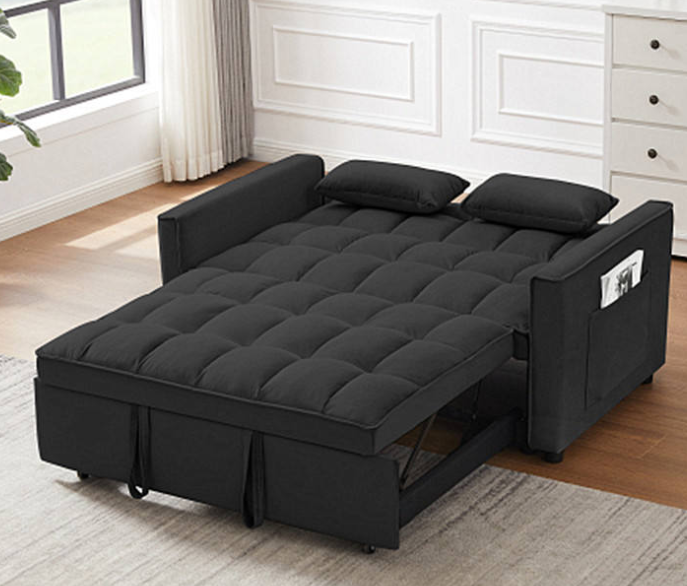
From what we see in our buyer feedback and return data, the romance with sleeper sofas is wearing thin.
The mechanics are a pain point. We've tested dozens of mechanisms over the years—pull-out frames, click-clack systems, book-fold designs—and honestly, even the best ones require effort. Customers tell us they avoid using them because it feels like a project every time guests stay over. One retailer we work with mentioned that nearly 30% of sleeper sofa buyers never actually pull the bed out after the first month.
Then there's comfort. A sleeper sofa tries to be two things at once and often fails at both. The mattress sits on a metal frame with minimal support, and the sofa cushions need to be firm enough to hide the mechanism underneath. We've tried engineering around this, but physics doesn't lie—you're always compromising somewhere.
Weight and cost don't help either. A quality sleeper sofa with a durable mechanism weighs 150–200 pounds. Shipping costs eat into margins, and for consumers, moving one up a narrow staircase becomes a logistical nightmare.
Here's what changed: daybeds stopped being just backups.
We're seeing this in design briefs from our ODM clients. The new brief isn't "formal seating that converts to a bed." It's "a lounging space that feels intentional." Daybeds fit naturally into how people actually use their homes now—scrolling on their phones, reading, napping, working from odd corners of the apartment.
The aesthetic works too. A daybed doesn't pretend to be something else. It's honest furniture, and that resonates with the current minimalist, Scandinavian-inspired trends we keep seeing in mood boards.
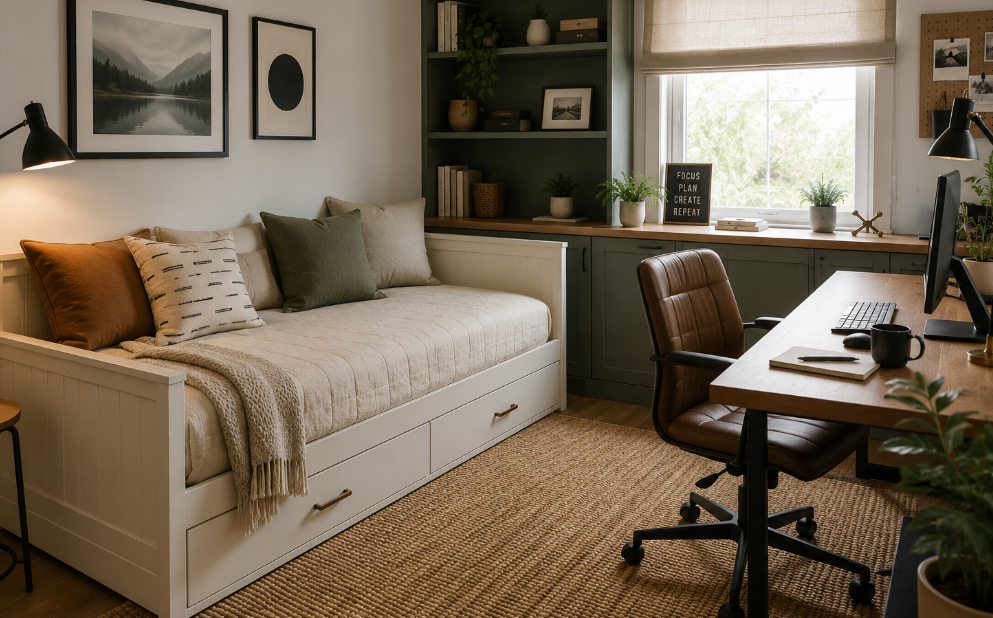
This might sound superficial, but it matters commercially: a daybed photographs better than a sleeper sofa.
We started noticing this when influencers and interior designers stopped featuring sleeper sofas in their posts. A daybed styled with linen bedding, textured throws, and a few pillows looks curated. A sleeper sofa, even a nice one, just looks like a couch. Our retail partners tell us that customers now come in with saved Instagram posts—and daybeds show up far more often.
We've had several buyers switch their purchasing ratios over the past two years. A few patterns explain why:
Inventory flexibility. A daybed doesn't need to be sold as a "guest bed solution." Retailers can position it in living room sets, home office displays, teen bedroom sections, or even outdoor collections. That's four revenue opportunities versus one.
Lower friction sales. When a customer sits on a sleeper sofa, the first question is always: "Can we try the bed?" That requires floor staff, time, and often ends with the mechanism jamming halfway. With a daybed, the try-out is simple—sit, lie down, done. Sales cycles shorten.
Returns and complaints drop. We track warranty claims across both categories. Sleeper sofas generate 3–4 times more complaints, mostly about mechanisms failing or mattresses sagging. Daybeds? Almost zero mechanical issues because there's nothing to break.
This realization shifted how we approach product development.
Customers buying furniture for small spaces aren't optimizing for "how many guests can I sleep." They're asking, "How can I make this room work for multiple needs without feeling cramped?"
A daybed answers that better. It functions as seating during the day without requiring cushion removal or rearranging. It handles overnight guests without a mechanical conversion. It works as a reading nook, a work-from-home break area, or just a spot to throw your jacket.
One of our wholesale clients in California mentioned that their customers stopped asking whether a daybed "converts" into anything. The question became: "Does it fit my lifestyle?" That's a completely different purchase mindset.
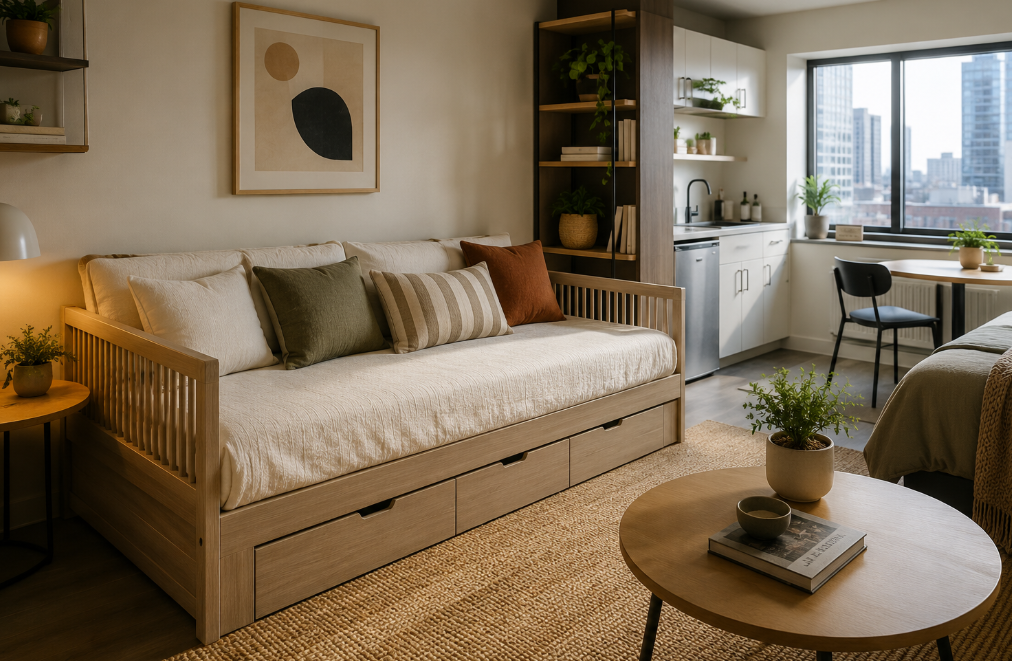
We manufacture for buyers across North America and Europe, and the housing data tells the same story: apartments are getting smaller, and people are living in them longer.
In cities like New York, London, and Toronto, the average studio or one-bedroom apartment is under 600 square feet. A sleeper sofa takes up the same footprint as a daybed, but it visually dominates a small room. A daybed, especially with a lower profile and open base, keeps sightlines clear and makes the space feel bigger.
Renters are another factor. We've noticed a spike in orders from retailers targeting younger renters who move frequently. A daybed is lighter, easier to disassemble, and doesn't require professional movers. We've designed several models specifically with tool-free assembly for this demographic.
From our side as an OEM/ODM supplier, here's what matters more than aesthetics: operational simplicity.
A sleeper sofa involves multiple sub-suppliers. We source the frame from one partner, the mechanism from another (often overseas), the mattress from a third. Coordinating lead times, quality standards, and shipping schedules across those components adds weeks and risk. If the mechanism supplier has a delay, the entire production line stalls.
Daybeds streamline everything. We control the frame, upholstery, and slat system in-house at our facility. Fewer moving parts mean tighter quality control and faster turnarounds. For buyers working on seasonal timelines or flash sales, that two-week difference in lead time is critical.
Cost structure shifts too. Mechanisms are expensive—$80–$150 per unit depending on quality—and they're often the first thing to fail. Removing that component drops the per-unit cost by 20–30%, which either improves margins or allows for more competitive retail pricing.
We've also seen how freight calculations favor daybeds. A flat-pack daybed frame fits more units per container compared to bulky sleeper sofas. We recently optimized a shipment for a Midwest distributor and increased container capacity by 35% by switching their order from sleepers to daybeds. That's pure margin improvement.
We don't think the question is "which product is hotter right now." We think it's about alignment—does the product match your customers' actual behavior and your operational strengths?
If your market prioritizes:
If your market still needs:
We customize both categories at Leizi, but we actively steer our ODM clients toward daybeds unless they have specific regional or demographic reasons to stick with sleepers. The quality consistency is just easier to maintain, and customer satisfaction scores are measurably higher.
After working with hundreds of furniture buyers and watching consumer behavior shift, we believe this: the future of small-space furniture isn't about cramming more functions into one piece—it's about designing pieces that adapt naturally to how people live.
Today's buyers want transparency, ease, and aesthetics that don't compromise. Daybeds deliver that.
From a manufacturing standpoint, we're investing more in modular daybed designs with customizable upholstery, sustainable materials, and faster production cycles. We see that's where the volume is heading, and where the quality control is tightest.
If you're evaluating your next furniture line or looking for an OEM partner who understands these shifts, we'd recommend focusing on what your customers will actually use—not just what sounds clever on a product tag. At Leizi, that's the standard we build to, and it's why our daybed reorders keep climbing while sleeper sofa requests plateau.
The small-space furniture market is changing. The smart move isn't chasing what worked five years ago—it's building what makes sense for how people live today.
メールフォーマットエラー
emailCannotEmpty
emailDoesExist
pwdLetterLimtTip
inconsistentPwd
pwdLetterLimtTip
inconsistentPwd