
Currency

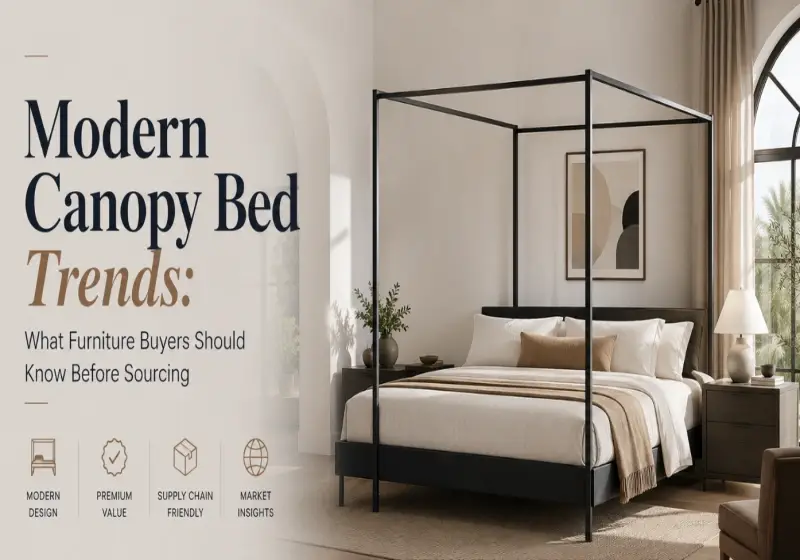
We've been manufacturing beds for over fifteen years, and we watched canopy beds go through a rough patch between 2015 and 2020. Retailers told us the same things repeatedly: too bulky, too feminine, too specific.
The problem wasn't demand for statement beds. People still wanted bedroom furniture that felt special. The issue was execution. Traditional four-poster designs with heavy drapes required high ceilings, large rooms, and a very particular aesthetic commitment. They photographed beautifully in magazines but created headaches in real homes.
Our production data from that period shows something interesting. Custom orders for canopy beds dropped, but inquiries never actually stopped. Buyers kept asking if we could modify designs—remove the fabric, slim down the posts, lower the height. The desire was there. The existing solutions just didn't fit modern living spaces or lifestyles.
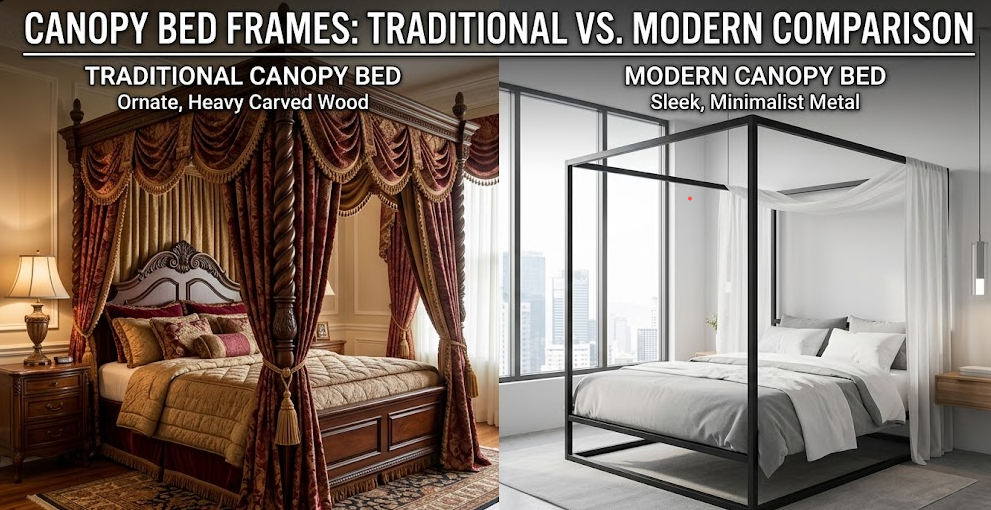
Around 2019, we started seeing a pattern in our ODM requests. Designers weren't asking for "canopy beds" anymore. They were asking for "architectural bed frames" or "statement headboards with vertical elements."
Same product. Different language. Different thinking.
This shift matters more than it sounds. When you stop thinking about a canopy bed as a decorative piece requiring fabric and start seeing it as an architectural frame that defines space, everything changes. The metal frame canopy beds we manufacture now serve a completely different function than what we made ten years ago.
We tested this in our showroom. Two beds, similar footprints. One traditional four-poster with fabric options. One minimal metal frame, no fabric, clean lines. Buyers spent three times longer examining the modern frame. They pulled out their phones, measured, asked about customization. The traditional bed got polite nods.
That's when we understood: the structure became the feature, not the decoration.
From a manufacturing and wholesale perspective, modern canopy beds solve problems that traditional designs created.
Our current bestselling canopy frame uses 40% less material than comparable traditional models, ships in 30% less cubic space, and assembly time dropped from 45 minutes to about 20. These aren't small improvements for buyers managing logistics and warehouse costs.
The commercial appeal goes deeper though. Modern metal frame canopy beds work across multiple room sizes and ceiling heights. We've had the same frame design installed in 2.4-meter ceiling apartments and 4-meter loft conversions. The same product serves both markets. For retailers, that's inventory efficiency that traditional canopy beds never offered.
Quality control improved too. With simpler geometries and fewer components, our defect rate on canopy frames runs about 0.3%—lower than our regular bed frames. Cleaner welds, fewer joints, more consistent powder coating results. When you're producing at scale, these differences compound quickly.
We've noticed something in our order patterns over the past 18 months. About 70% of our canopy bed orders now specifically request frame-only designs with no fabric hardware, no curtain attachments, no draping mechanisms.
This surprised us initially. We kept asking: "Are you sure you don't want the mounting points for fabric? It's minimal cost." Most buyers declined.
After talking with several retail partners, the logic became clear. Frame-only canopy beds offer something valuable: customer choice without complexity. The frame creates the visual impact and defines the space. If customers want to add fabric later, they can use their own methods. But the bed doesn't require it to look complete.
This approach also photographs incredibly well for online retail, which matters more every year. A clean metal frame looks intentional and finished in product photos. Traditional canopy beds with partial draping often look incomplete in still images—customers can't visualize the final result.
We've adapted our OEM services around this trend. Our design team now focuses on frame proportion, weld aesthetics, and powder coating finishes rather than fabric integration. The questions changed from "how do we attach curtains?" to "how do we make every angle of this frame photographable?"
Here's something we didn't expect: canopy beds became content generators.
We track social media mentions when possible—not scientifically, but enough to see patterns. Customers who buy canopy beds post about them at roughly three times the rate of standard bed frames. The vertical lines, the dimensionality, the way they frame both the bed and the person in it—these elements create shareable moments.
For furniture retailers, this matters commercially. A bed that generates customer content creates organic marketing value beyond the initial sale. We've had several e-commerce buyers specifically mention this when explaining their interest in adding canopy beds to their range.
The design implications flow backward to us in manufacturing. We now think about how frames look from multiple angles, not just the foot of the bed. Camera phones shoot from all positions. Details that were invisible in traditional retail photography—weld quality, metal finishing, geometric precision—become visible and important.
This content angle also influences our customization conversations. Buyers ask about unique finishes, mixed materials, asymmetric designs. They want canopy beds that don't look like everyone else's because visual distinction drives content sharing.
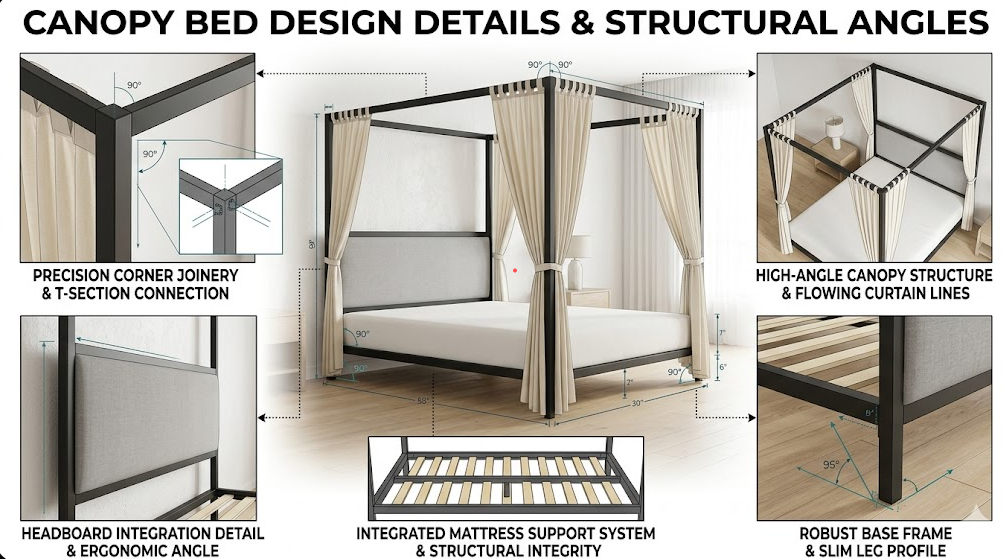
After hundreds of conversations and production runs, we've developed pretty clear ideas about what makes a canopy bed commercially viable for wholesale buyers in 2025.
Ceiling clearance flexibility matters most. We design our frames to work in 2.4-meter standard ceiling environments while still looking proportional in higher spaces. This usually means keeping the canopy height between 1.9 and 2.1 meters from floor level. High enough to create presence, low enough to fit most residential spaces.
Material efficiency without visual compromise separates successful designs from expensive mistakes. We've refined our metal canopy frames to use hollow tube construction that maintains visual weight while reducing actual weight by 25-30%. Shipping costs decrease, but the bed still looks substantial in room settings.
Modularity keeps coming up. The ability to offer the same base frame in multiple finishes or with different headboard options gives retailers flexibility without forcing us to maintain separate production lines. We've built our OEM process around configurable components rather than completely custom designs.
Assembly simplicity isn't exciting but directly impacts returns and customer satisfaction. We test every design with people who've never seen the product before. If assembly takes longer than 25 minutes or requires more than basic tools, we redesign. This discipline has reduced assembly-related issues by about 80% compared to our earlier canopy models.
Price positioning creates interesting decisions. Our data shows the sweet spot for wholesale canopy beds sits roughly 35-50% above standard frame prices. Higher than basic beds, but not luxury tier pricing. This positioning lets retailers create perceived value without entering the territory where customers expect hardwood construction or hand-finishing.
We're already planning production capacity for late 2026, which means making bets on where this market moves next.
Material mixing looks increasingly important. We're developing frames that combine metal structures with wood accents or upholstered elements. Not traditional combinations, but integrated designs where materials serve clear functional or visual purposes. Early samples test well with design-focused retailers.
Sustainability documentation matters more every quarter, especially for European buyers. We're implementing tracking for our metal sourcing, powder coating VOC levels, and packaging materials. This information wasn't relevant for canopy bed buyers three years ago. Now it's part of almost every significant negotiation.
Size range expansion continues. We've added twin/single canopy frames to our standard range after consistent requests from buyers serving markets with smaller bedrooms or customers wanting statement pieces in guest rooms or children's rooms. The design challenge is maintaining presence at smaller scales without looking disproportionate.
Smart integration points come up occasionally, though we're cautious here. Some buyers ask about integrated lighting or USB charging in canopy posts. We've developed options but don't push them. The risk of adding electronic failure points to furniture that should last decades makes us conservative.
Finish durability gets more attention as canopy beds move into higher-traffic commercial settings. We're seeing orders from boutique hotels, Airbnb furnishing companies, and student housing developers. These applications require more robust powder coating and better corrosion resistance than residential furniture typically needs.
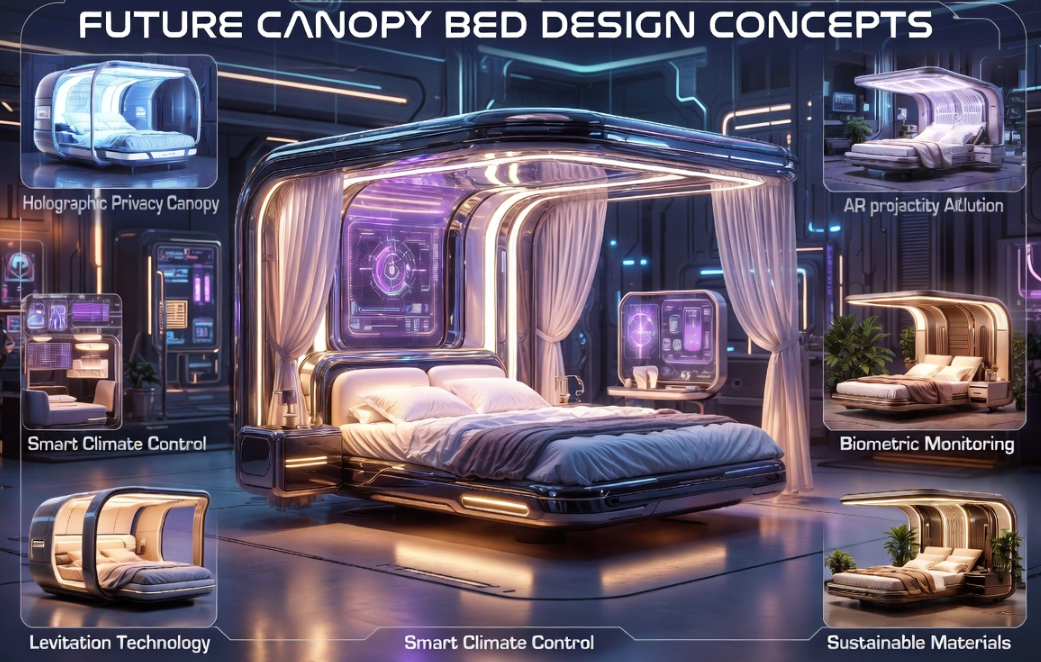
The canopy bed market isn't returning to its traditional form. That chapter closed. What's emerging is actually more interesting from a commercial perspective—a product category that bridges decorative furniture and spatial architecture. Beds that define rooms rather than just occupy them.
For buyers considering adding canopy beds to their range, we consistently recommend starting with frame-only metal designs in two finishes maximum. Test the market before committing to complex inventory. The customers who want canopy beds in 2025 typically know they want them—this isn't an impulse category. But they also want options and reasonable pricing.
At Leizi, we've oriented our OEM and ODM capabilities around flexibility in this category. We'd rather help buyers develop one really solid canopy bed design that fits their market than produce six mediocre variations. Our quality control processes, material sourcing, and production planning all support focused execution rather than endless SKU expansion.
For furniture buyers willing to reconsider what seemed like outdated products, there's real opportunity here. Just make sure you're sourcing the 2026 version, not the 2015 one.
メールフォーマットエラー
emailCannotEmpty
emailDoesExist
pwdLetterLimtTip
inconsistentPwd
pwdLetterLimtTip
inconsistentPwd